--
What to know about automated insulin delivery


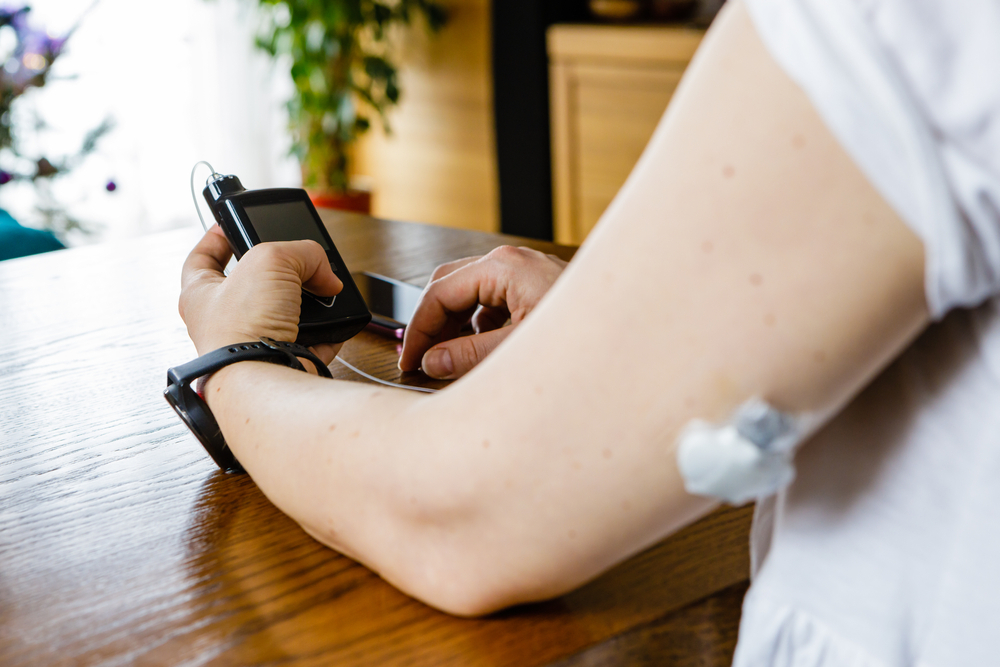
At my day job, we use automation to dock spacecraft — a set of sensors is used to make complicated decisions autonomously. Somewhat ironically, the insulin pump I wear every day also uses this same basic principle, known as automated insulin delivery (AID).
As an engineer and busy mom of two, I was eager to put my trust in these algorithms, but I had questions. What exactly is AID? How does it affect diabetes management? What are the available options? And could it work for me?
Finding answers to these questions helped me feel more confident in using the technology. If you're considering adding AID to your diabetes management regimen, here's what to know.
What is automated insulin delivery?
Technically, AID is a combination of three different elements: sensors, mechanics, and algorithms designed to dose and deliver insulin automatically.
Let's break that technical description down a bit.
The first component, sensors, refers to the use of continuous glucose monitoring (CGM) technology. These systems provide glucose readings at set intervals to a receiving device. In an AID application, the CGM readings are usually transmitted directly to an insulin pump. The insulin pump then acts as the mechanics and algorithm piece of the system, using the inputs from the CGM to calculate insulin delivery or suspension.
While the technology is rapidly evolving, as of now, the patient is still involved in the overall control loop. As users, we're responsible for telling the system how many carbohydrates we ate (or plan to eat) and managing the initial setup of our insulin-to-carb ratios and insulin sensitivity factors. Our endocrinologists and diabetes educators can help us calculate these variables.
Additionally, some of these systems have special sets of algorithms for specific activities — such as sleep or exercise — that require user input to initiate. For instance, I need to tell my pump when I'm entering an exercise period in order for the exercise algorithms to kick in.
The effect AID has on time-in-range
The buzzword "time-in-range" has pretty much eclipsed "hemoglobin A1C" as an indicator of overall diabetes management. Instead of one number meant to represent someone's average blood sugar over a three-month period, time-in-range aims to paint a more detailed picture of diabetes management.
Where hemoglobin A1C by itself can fall short is its inability to indicate high and low blood sugar swings. For instance, your A1C could be within the normal range even if you're experiencing a roller coaster of blood sugar readings. Time-in-range provides a way to measure how steady your blood sugar is and, when combined with hemoglobin A1C, can better illustrate your diabetes management efforts.
Overall, the American Diabetes Association reports AID "has improved the regulation of blood glucose concentrations, reduced the frequency of hyperglycemic and hypoglycemic episodes, and improved the quality of life of people with diabetes and their families." These are general statements based on study data, but finding ways to streamline diabetes management while potentially improving quality of life has a nice ring to it!
Available AID systems in the US
AID technologies are becoming more widely available as the insulin pump platforms at the heart of these systems evolve and become more adaptable. The two main systems are from Medtronic and Tandem:
- Medtronic MiniMed 770G System. Medtronic's AID system consists of a tubed insulin pump, a CGM, and an optional mobile app. This system also has the capability to receive software upgrades as algorithms are improved and new features come online.
- t:slim X2 insulin pump with Control-IQ technology. Tandem Diabetes has an AID system featuring components similar to the Medtronic system. However, the Tandem system is also integrated with Dexcom CGMs and has the capability for software upgrades.
Interested in learning more about streamlining diabetes management? Check out this article on how automating diabetes management can reduce stress.