--
How to produce more breast milk for your baby


Almost every first-time nursing mother has questions about how to produce more breast milk. Moms want to be sure they're doing everything they can to provide for their babies, including boosting their milk supply so their babies can grow strong and healthy. Here's how to ensure you're producing as much breast milk as possible for the newest addition to your family.
What determines breast milk production?
Shortly after birth, the mother's level of the hormone progesterone sharply declines and several other hormones increase, including prolactin and oxytocin. Prolactin promotes breast milk production, and oxytocin triggers the release of milk from the breasts when a baby nurses.
In the first two weeks after birth when breastfeeding is just getting started, milk production is hormonally driven. This may be nature's way of helping to ensure that a baby who has trouble getting a good start at breastfeeding will still have milk while they learn to nurse well.
After lactation is established, milk production is determined by how often the breasts are emptied. In other words, breast milk works on a supply-and-demand basis. So, the more the infant nurses or a mother pumps, the more milk their body will make.
How to produce more breast milk
If you plan to exclusively breastfeed, you'll want to do all you can to ensure a full milk supply. Follow these guidelines to help you produce as much breast milk as possible.
Nurse soon after birth
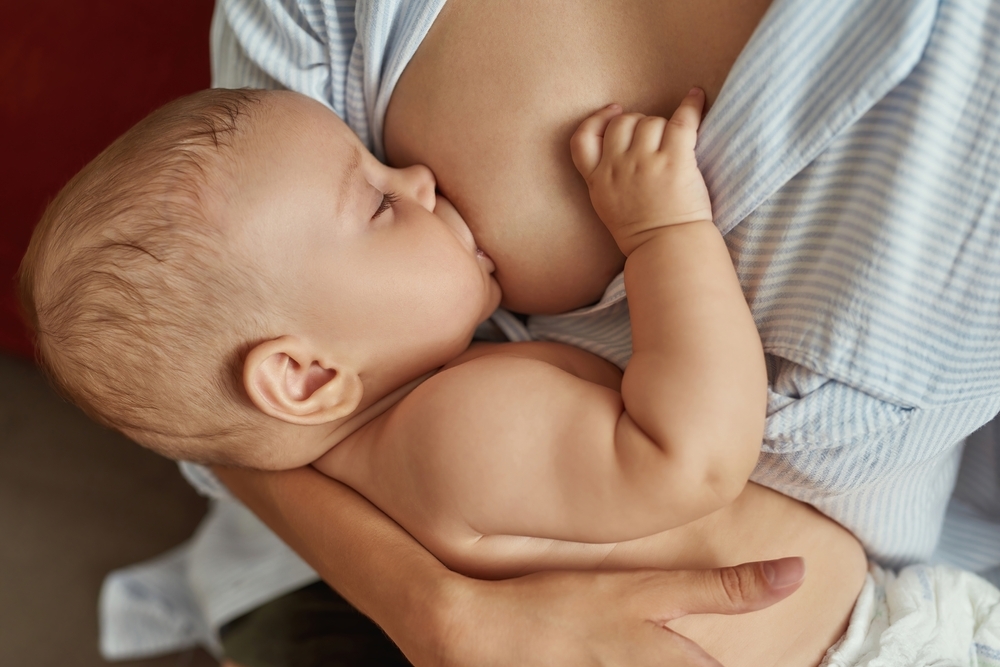
Babies usually have a short window of time immediately after birth when they're alert, and then they become sleepy for a day or two. Try to nurse your baby skin-to-skin immediately after birth. This will help your baby "imprint" your breast as their source of nourishment, and it will help them bond with you too.
Early skin-to-skin contact will not only help strengthen the bond between you and your baby, it can also help your baby regulate their physical health. Often, babies born to mothers with gestational diabetes experience low blood sugar after birth. But when babies are skin-to-skin with mom, they are half as likely to develop low blood sugar, and 80% less likely to need formula supplementation to correct a low blood sugar level.
Additionally, newborns are significantly less likely to have difficulty maintaining their body temperature if they receive skin-to-skin contact in the first hour of life. This is a low-cost, highly effective way to prevent hypothermia in newborn babies.
Nurse often
Newborn babies need to nurse at least once every three hours, and sometimes they need to nurse more frequently than that. If your new baby wants to nurse every hour for several hours, it doesn't mean they're starving; it more likely means they feel safe and secure at the breast. This constant nursing in the early stages also helps your milk come in. As your baby gets older, you'll need to nurse or pump a minimum of eight times in 24 hours, and you'll need to wake to nurse or pump at least once every night to keep up your milk production.
Drink enough water
Since breast milk is a fluid, you'll have to take in extra fluids so your body can make milk. Drink a minimum of 2 liters of water every day. If that sounds like a lot, try drinking 8 ounces of water every hour while you're awake.
Eat sufficient calories
Breastfeeding isn't a good time to go on a weight loss diet. Nursing moms need to eat 300-500 more nutrient-dense calories per day than they would if they weren't breastfeeding, preferably in the form of high-quality fruits, vegetables, whole grains, and proteins. Embrace the need to eat to produce high-quality breast milk for your baby.
Rest
An exhausted mom won't produce as much milk as a well-rested mom. When friends and family offer to help, say, "Yes!" and head off to nap with your baby.
Pump when away from your baby
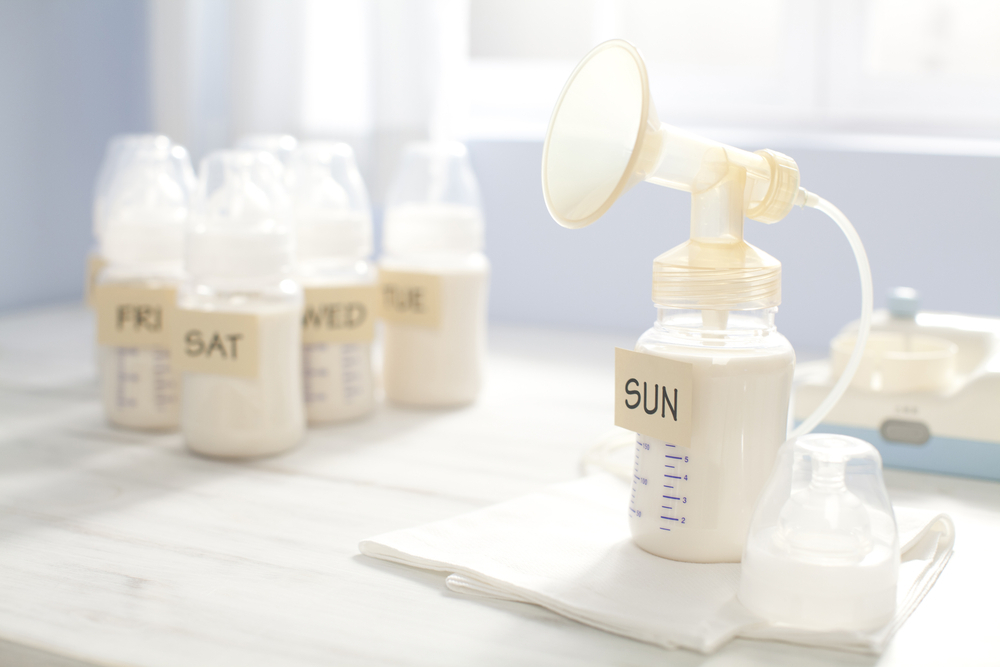
If you're away from your baby, pump as often as your baby would nurse if you were together to maintain your milk supply. Get a high-quality breast pump and take frequent breaks to use it.
Some babies require a little less or a little more, but the average 3-month-old, exclusively breastfed baby takes about 25 ounces of breast milk per day, and most mothers can meet their babies' needs for breast milk by using the tips above.
For more information about how important breastmilk is to your baby's health, check out this guidance from the CDC.
Want to know more about getting ready to bring home your new baby? Take a look at this third-trimester pregnancy checklist.
Sources:
Kent JC, Prime DK, Garbin CP. Principles for maintaining or increasing breast milk production. J Obstet Gynecol Neonatal Nurs. 2012 Jan-Feb;41(1):114-121. doi: 10.1111/j.1552-6909.2011.01313.x. Epub 2011 Dec 12. PMID: 22150998.
Institute of Medicine (US) Committee on Nutritional Status During Pregnancy and Lactation. Nutrition During Lactation. Washington (DC): National Academies Press (US); 1991. 5, Milk Volume. Available from: https://www.ncbi.nlm.nih.gov/books/NBK235589/